



Marketing Operations
Experience: Marketing automations (email, Zapier), CMS administration and website development, editorial content planning, media planning, CRM marketing administration (campaign management, new business sales reporting, sales enablement templates), email marketing system administration and demand gen campaign builds, sales performance analysis, website analytics, SEO, GEO, social media and ad managers, budget management.
Collaboration across marketing, sales, IT, design, operations, product, and product marketing
MarTech & Tools: Salesforce, Pipeliner, Pipedrive, HubSpot, Campaign Monitor, Marketo, Marketing Cloud, GitHub, Webflow, Figma, WordPress, CoSchedule, Hootsuite, Rebrandly, SEMrush, Adobe Creative Cloud, Descript, Social Ads, Google Ads, Google Analytics, Matomo, Google Search Console, Wrike, Basecamp, Notion, n8n, Zapier, Claude API
CONTENT REPURPOSING AUTOMATION WORKFLOW
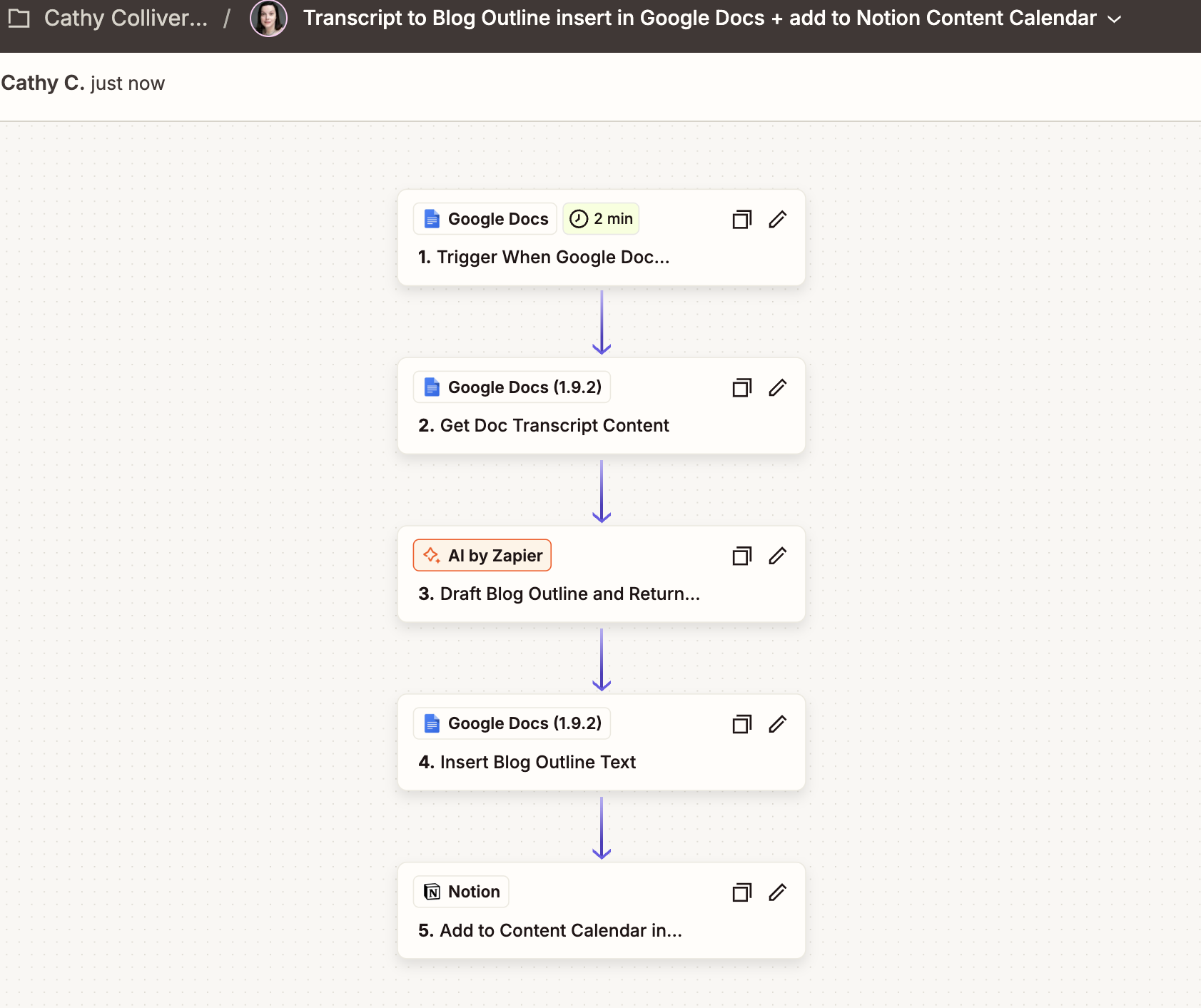
Creating content from recorded conversations—interviews, roundtables, internal discussions—is time-intensive and easy to deprioritize. The raw material exists, but turning a transcript into a publishable draft requires enough manual effort that it often sits in a backlog. For a lean marketing operation, that's a real cost. The bottleneck isn't ideas or source material. It's the production step between capture and draft.
The workflow:
Trigger: Select Google Doc with new transcript following a recorded video conversation
Transform: Zapier passes the transcript to Claude model, with a prompt that restructures and rewrites the content into blog-format draft copy
Output: The outline draft is inserted into the Google Doc
Log: A new Notion content calendar database entry is created
Content draft ready for fine-tune editing with the source material traceable back to the original recording!
What's working, what's still in testing
The core pipeline is functional. I'm refining the prompt logic to improve draft quality across different conversation formats. A structured interview produces a cleaner first draft than a more free-flowing discussion, so I'm testing prompt variations that account for that.
The content calendar integration is also going through refinement to assess which fields to pre-populate vs assign later after editing. The goal is a single entry point for editorial review, so nothing lives in a disconnected doc that has to be tracked down later.
Why this matters
This workflow reflects a core principle I bring to marketing operations: automation should remove friction from high-value work, not replace the judgment that makes content worth publishing. The draft this produces still gets fine-tuned and edited. But it eliminates friction amidst lean team realities.
MARKETING PLANNING
- Go-to-Market strategy and positioning for brands, solutions, professional services, and products
- Marketing roadmap planning of strategic, marketing, and sales enablement initiatives
- Streamline collaboration within large marketing teams and cross-functionally
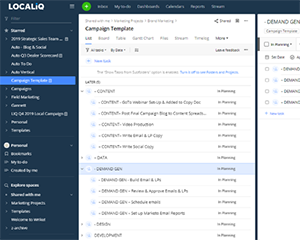
- Vet, implement, and design custom MarTech stack to establish marketing department foundations at a software consulting agency—all with an ownership mindset on a limited budget
- Build out and optimize marketing operations and sales enablement processes across functions
- Budget planning across ongoing baseline marketing, promotional marketing, brand awareness campaigns, and demand gen campaigns
- Managing marketing due diligence, brand transition, and brand repositioning efforts around mergers and acquisitions—and project managed due diligence as a whole for one merger and one acquisition
CAMPAIGN PLANNING
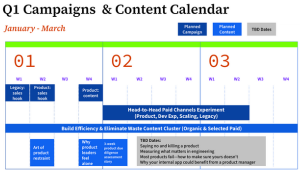
- Strategy, message maps, briefs, creative direction, content planning
- Project management of campaign activities from project plan design to implementation and reporting
- Sales enablement including rollout of campaign, review of sales resource toolkits, and expectations for sales follow-up on leads
- Streamline campaign processes and tools, including campaign templates to increase efficiencies across multiple marketing departments
- Campaign retro wrap-up reporting and recommendations for iterative improvement
- Editorial content planning to incorporate needs across ongoing brand awareness, SEO and campaign content
MARKETING ANALYSIS
- Analyze MQL, SQL, Opportunity Conversions, and Closed Won Revenue to optimize marketing activities over time
- Identify most efficient marketing activities and highest converting lead sources to inform ongoing marketing optimization and planning
- Lead gen and MarTech analysis to assess current programs & capabilities, make recommendations on next steps, and implement iterative improvements over time
